East-West Recycling
When recyclable materials are picked up by East-West Disposal Services, it is just the beginning of their journey. Each different type of material, when separated, goes through a different handling process and ends up reused in many of the products we use in our daily lives. Here is how Blue Environmental, and some of its partners in waste management, process the different items that find their way into the recycle bin.

Recycling pickup across the GTA, from East-West waste management
Recycling toters and bins for homes and businesses. See bin sizes and pricing.
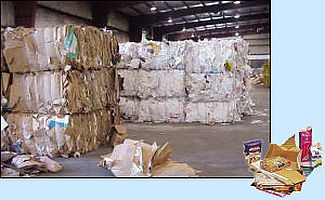
Pickup of baled cardboard and paper, ready to be shipped to the mill and repulped into new paper products.
Pickup of scrap iron and other metals across the GTA, so they can be melted down and reused.
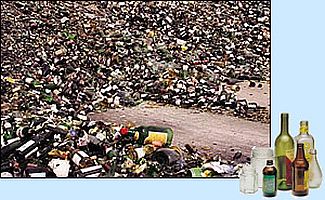
Recycled glass is called cullet. Glass container manufacturers recycle cullet, combined with soda ash, limestone and sand, to create “new” glass. Because cullet melts at lower temperatures, furnaces aren’t required to operate at the higher levels needed to melt raw materials. The bottom line? Increased energy savings.
Glass manufacturers generally require cullet that is separated by colour: clear, amber, green. Additionally, contaminants such as ceramics, light bulbs, Pyrex, and mirrors should be removed. The market for mixed cullet is small, as it can only really be used for construction materials such as fiberglass.
Following collection of paper and cardboard, processing begins with sorting and baling. Once the bales (weighing about 500 kilos each) are shipped to the mill, they are repulped, which involves soaking in large vats of water and chemicals to separate them into fibres. The resulting pulp is then filtered through a number of screens to remove impurities such as coatings, additives, and fillers.
Next, to deink the pulp, it is put into a flotation device with soapy chemicals. When air bubbles are blown into the mixture, the ink sticks to the bubbles and rises to the top, where it is skimmed off. The pulp is now ready to become new paper products, and sulphide emissions have been cut by 60%.
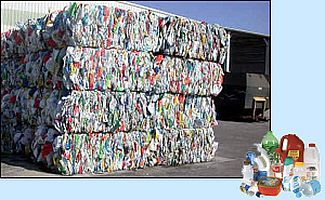
Plastics must first be sorted by polymer type and/or colour, usually manually by trained staff, but technology is on the horizon to do this automatically using flotation and electrostatics. Following sorting, the plastic is either melted down immediately and formed into new shapes, or shredded into flakes and processed into granules called “regranulate”.
One polymer in particular, PET (PolyEthylene Terephthalate), used for pop bottles and trays for oven-ready meals, can easily be converted into polyester suitable for the textile industry. At this time, several North American T-shirt manufacturers are making shirts from used cola bottles!
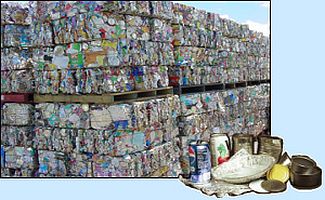
Collected cans and foil are first separated into steel and aluminum, usually by the use of electromagnets. Aluminum makes up only 2% of the weight of collected recyclables, but accounts for 50% of the value: it is melted down to make large ingots, then rolled out to make new cans.
Steel undergoes a different process. First, the thin coating of tin is removed from the cans (and itself recycled). Then bales of tightly crushed cans are used by steel companies such as Dofasco and Stelco to make new products. The can that held your dinner last year might by now be part of a new apartment building.
New recycling technologies are being invented constantly. Additionally, some existing processes, long considered too costly, become practical as the cost of new materials increases. At East-West Disposal Services, we keep up with new developments, both to stay competitive and to help our environment.
Glass manufacturers generally need cullet separated by colour (clear, amber, green), with contaminants such as ceramics, light bulbs, Pyrex and mirrors removed.
It is sorted and baled, shipped to the mill, repulped into fibres, cleaned and de-inked, then made into new paper products.
They are separated with electromagnets. Aluminum is melted into ingots and rolled into new cans, while steel has its tin coating removed and is baled for steel makers.
Yes. We offer recycling toters and bins, pickup of baled cardboard and paper, and scrap iron and metal pickup across the GTA.
Ask us about recycling toters and bins, baled cardboard and paper, and scrap metal pickup.